


Helpful for labor shortages and an aging workforce! What are the benefits of DX in the construction industry? [Construction DX]

It has been quite some time since the term "DX" (Digital Transformation) became commonplace, but many people may still wonder what specific steps they should actually take. In this article, we explore DX in the construction industry, a sector often said to face challenges in advancement due to various circumstances.
The construction industry is lagging behind other sectors in digital transformation (DX)
First, let's look at what "DX" actually means. According to the definition by the Ministry of Economy, Trade and Industry,
Companies adapting to rapid changes in the business environment by utilizing data and digital technologies to transform products, services, and business models based on the needs of customers and society, while also reforming operations, organizations, processes, and corporate culture to establish a competitive advantage.
Ministry of Economy, Trade and Industry "Digital Governance Code 2.0"
While similar, "IT integration" generally focuses on internal efficiency, such as streamlining internal applications and digitizing paperwork, whereas "DX" involves engaging external partners and customers in the digital transformation process to enhance competitiveness within the industry.
The necessity of "involving business partners and clients" is one of the factors making DX difficult to advance in the construction industry. With many micro-enterprises such as sole proprietorships and a growing aging population, quite a few people are resistant to introducing new systems or digitizing operations.
3 key benefits of implementing DX
What are the benefits of promoting DX? Here are three key advantages.
Creating safe and comfortable working environments
- Implementation of unmanned and autonomous construction using robotics and AI
- Applications of Power Assist Suits
In hazardous work environments, safe and comfortable working conditions are achieved by utilizing heavy machinery capable of VR remote operation or by wearing power assist suits when transporting heavy loads.

Operational Efficiency
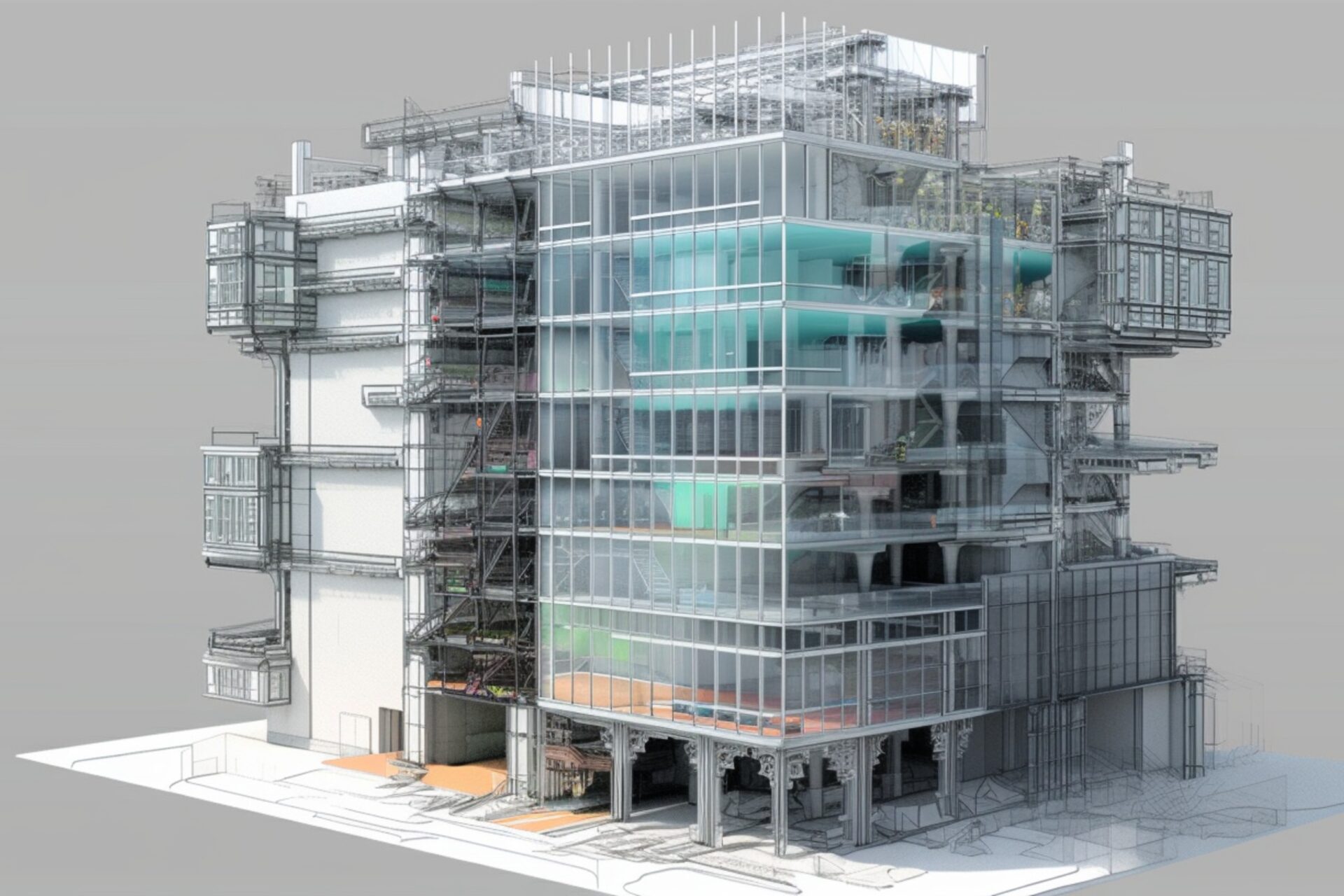
- Centralization of information through the implementation of BIM/CIM (3D modeling)
- Drone-based surveying
BIM/CIM refers to software that creates 3D models of buildings and structures. It allows for more detailed simulations than traditional 2D CAD. By integrating data such as costs, materials, and construction schedules, it helps streamline operations.
Additionally, using drones for surveying can significantly reduce working hours and labor requirements.
Seamlessly Passing Down Technical Expertise
- Visualizing Expert Skills
- Teach AI the techniques of skilled workers and have it learn judgment criteria
By using motion sensors to visualize the movements of skilled workers, techniques can be easily conveyed to younger generations. Furthermore, by having AI learn the judgment criteria of skilled workers, the AI will eventually be able to make judgments on its own, allowing expert skills to be widely utilized.

Thus, DX offers significant benefits not only as a countermeasure against labor shortages and an aging workforce. Many local governments provide various subsidy programs for support, so if you have financial concerns, we encourage you to contact your local municipality.
Furthermore, Act-One Yamaichi is committed to providing equipment and services that align with DX trends, such as strengthening data management, to better serve our customers. If you have any questions or needs regarding construction equipment and materials, please feel free to contact us anytime!
*The photos shown are for illustrative purposes only.
*All content is based on cases in Japan.