


What Is CCUS? An Explanation of How It Works, Its Benefits, and How to Record Work History

Getting Started
In the construction industry, labor shortages and the aging of skilled workers are progressing, making securing future successors a major challenge.
To address this, it is important to properly evaluate the skills acquired by workers and the experience accumulated on-site, and to lead to the improvement of working conditions.
Against this background, the "Construction Career Up System (CCUS)" is operated.
You may have heard the name CCUS, but do you not know much about what it entails?
This article explains in an easy-to-understand manner the basic mechanisms of CCUS, its penetration status, the benefits of introducing it, and how to register work history.
Table of Contents
- What is CCUS?
- Launch of CCUS
- Penetration Status of CCUS
- Information Registered in CCUS
- Benefits of Utilizing CCUS
- Registration for CCUS is Optional
- How to Record Work History in CCUS
- Points to Consider When Choosing a Card Reader
- CCUS-Compatible Card Reader "EasyPass EP-02"
- Summary
What is CCUS?
CCUS is a system for cross-industry registration and accumulation of construction workers' qualifications and work history on-site.
It aims to record qualifications held by workers and their past on-site experience as data, leading to evaluations tailored to skills and experience.
In the construction industry, companies and work sites often change, posing the challenge of objectively proving the experience workers have accumulated.
By utilizing CCUS, workers can continuously accumulate their qualifications and work history even if their company or work site changes.
The Ministry of Land, Infrastructure, Transport and Tourism is promoting the penetration of CCUS in cooperation with construction industry associations, aiming to enable younger generations of workers to foresee their future careers and treatment, receive appropriate evaluations based on skills and experience, and have companies that employ and train workers recognized.
Launch of CCUS
CCUS began accepting registration applications in 2018, and full-scale operation started in April 2019.
Since the launch of the system, the scope of utilization has expanded, including not only the registration of workers and business operators, but also the accumulation of on-site work history, workers' ability evaluations, and cooperation with Kenrenkyo (Japan Construction Employees' Mutual Aid Association).
Based on qualifications and work history accumulated in CCUS, a system is also established to evaluate workers' abilities in 4 stages. It is also utilized for visualizing career paths, showing how workers step up while gaining experience.
Penetration Status of CCUS
The number of CCUS registrants and usage records has continued to grow since the system was launched.
The usage status as of the end of July 2026, published by the Ministry of Land, Infrastructure, Transport and Tourism, is as follows.
| Item | Usage Status |
|---|---|
| Registered Skilled Workers | Approx. 1.89 million |
| Registered Business Operators | Approx. 315,000 companies |
| Cumulative Work History Records | Approx. 283 million records |
Registered skilled workers account for approximately 60% of the total 2.96 million construction skilled workers in Japan. Of the approximately 315,000 registered business operators, about 109,000 are sole proprietors.
Beyond simply registering workers and business operators, the trend of actually accumulating work history records on-site is also spreading.
Moving forward, it will become even more important not only to be registered, but also to use CCUS continuously on-site and successfully accumulate work history records for skilled workers.
Information Registered in CCUS
To use CCUS, both business operators and skilled workers must complete registration.
1. Main Information Registered by Business Operators
Business operator registration includes the following information:
- Basic information such as company name and address
- Construction license information
- Status of social insurance enrollment
- Information on affiliated organizations and associations
Once registration and review are completed, a business operator ID is issued.
2. Main Information Registered by Skilled Workers
Skilled worker registration includes the following information:
- Personal information such as name and date of birth
- Affiliated business operator
- Certifications and qualifications held
- Status of social insurance enrollment
- Medical Checkup Status
- Work History on Site
Once registration and screening are complete, a technician ID is issued, and a "Construction Career Up Card," which is an IC card with a photo, is provided.
By using this card on-site, daily work histories are accumulated.
Benefits of Utilizing CCUS
CCUS offers benefits not only to skilled workers, but also to the contractors who employ them and the general contractors who manage the sites.
1. Easier to prove a skilled worker's qualifications and experience
A major benefit for skilled workers is that their qualifications and on-site work history can be accumulated as objective information. Even if their workplace or site changes, their past experience remains within CCUS, making it easier to prove their skills and career progression.
2. Leads to skill-based evaluations and improved treatment
CCUS features a framework that evaluates skilled workers' abilities in stages based on their held qualifications and days worked. By making skills and experience visible, it is expected to lead to appropriate treatment, such as wages and allowances that match their abilities. In fact, an increasing number of companies are paying independent allowances based on CCUS skill evaluations.
3. Easier to verify skilled worker information
Contractors can easily check the qualifications and work status of skilled workers. Since they can verify whether workers hold the necessary qualifications for a site and understand their experience, this information can be utilized for personnel allocation and worker training.
Registration for CCUS is Optional
CCUS is not a system that mandates universal registration by law for all construction businesses and skilled workers.
However, depending on the type of construction work and the worker's role, registration and utilization of CCUS may be required.
Additionally, national and local government public works are promoting initiatives to provide incentives, such as bonus points in construction performance evaluations, for projects that utilize CCUS.
Because primary contractors may also require CCUS registration as a site operation rule, it is necessary to check the bidding conditions of participating projects or the policies of the primary contractor to determine if it is actually required.
How to Record Work History in CCUS
In CCUS, work history on site is not automatically accumulated simply by registering businesses and skilled workers.
The primary contractor must register the site on CCUS, and the skilled workers must register the records of working at that site.
A typical method is for skilled workers to hold their Construction Career Up Card over a card reader installed at the site.
The basic workflow is as follows:
- The primary contractor registers site information in CCUS
- Install a CCUS-compatible card reader at the site
- Skilled workers hold their Construction Career Up Card over the reader
- Card information is read
- Work history is transmitted and accumulated in CCUS
By establishing the practice of swiping cards on-site, construction workers can continuously build up a work history of "when and on which site they worked."
However, the records created by swiping a CCUS card serve a different purpose than the attendance management conducted by companies. Because available functions vary depending on the card reader model and the integrated systems, it is important to check these details before implementation.
Points to Consider When Choosing a Card Reader
There are multiple types of CCUS-compatible card readers, each requiring different equipment, communication methods, and installation conditions.
When considering how to use them on-site, be sure to check the following points:
① Are a PC and peripheral devices required?
Some devices require a connection to a PC or tablet, while others have built-in communication features and do not need these external devices.
It is important to choose based on the installation location and whether on-site staff can operate them easily every day.
② Is it compatible with the communication environment?
Sending work histories to CCUS requires an internet connection.
If the site lacks a dedicated fixed line or Wi-Fi environment, consider devices that support mobile communication.
③ Can a power source be secured?
Depending on the device, power supply from an electrical outlet or battery charging is necessary.
Check whether a power source is available at the installation location and how long the device can be used on a single charge.
④ Is it suitable for the site's operating environment?
For outdoor or semi-outdoor installations, factors such as dust resistance, drip-proof performance, and temperature conditions must also be checked.
Consider the site environment to ensure the device can be placed in an accessible location where cards can be easily swiped while avoiding rain and dust.
⑤ Are operation and installation complicated?
Even if you introduce a card reader, if the setup and operation are complicated, it may not catch on at the site.
It is crucial to choose equipment that is easy to understand not only for site managers, but also for the workers who will actually be swiping the cards.
CCUS-Compatible Card Reader "EasyPass EP-02"
We offer rentals for the "EasyPass EP-02" card reader, which is compatible with CCUS work history registration.
The EasyPass EP-02 is a device that allows workers to register their work history on-site by swiping their Construction Career Up Cards.
Rather than purchasing a card reader, you can rent it for only the necessary period to match your project, making it a convenient option.
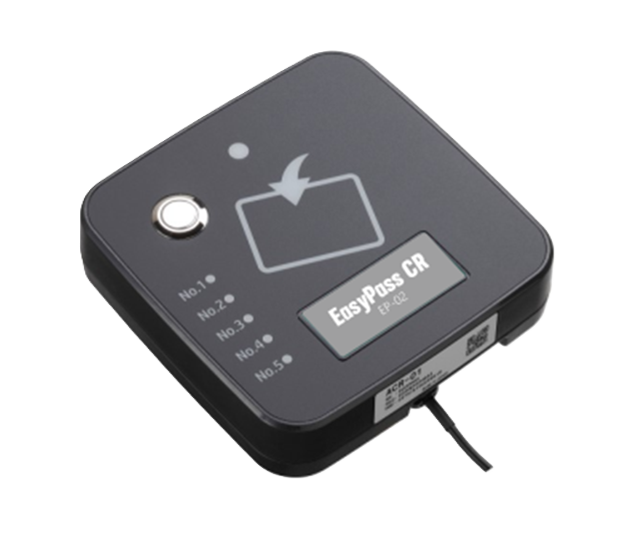
- [Easy Setup] Simply plug the card reader into an AC100V outlet to start operation
- [Hassle-Free] No need to power on/off the card reader or operate a PC morning and evening
- [Outdoor OK] Supports outdoor installation. Can be placed anywhere. *A separate rainproof box for the AC adapter is required.
- [Automatic Transmission] Stores card data even when offline and automatically transmits it once connection is restored
Summary
CCUS is a system designed to register and accumulate construction workers' qualifications and work histories on-site, allowing their skills and experience to be properly evaluated.
Full-scale operations began in April 2019, and as of the end of July 2026, approximately 1.89 million workers and 315,000 business operators are registered.
By utilizing CCUS, workers can easily verify their qualifications and experience, while business operators benefit from streamlined worker information verification and site management.
In addition, maintaining a continuous record of work history on-site requires setting up an environment where card readers and other tools can be readily used.
We offer rentals for the CCUS-compatible card reader "EasyPass EP-02".
Please feel free to contact us regarding on-site implementation, required equipment, and usage methods.