


Drone Applications on Construction Sites: Proven Effectiveness in Railway Viaduct Inspections
Challenges Facing the Construction Industry and How Drones Provide Solutions
In the construction industry, addressing labor shortages caused by an aging workforce and a lack of young recruits, as well as strengthening measures against occupational accidents such as falls, have become urgent issues.
Furthermore, the aging of infrastructure continues to drive up demand for inspections and maintenance. Consequently, there is a growing need to carry out these operations more safely and efficiently with limited personnel.
As a result, the use of drones is gaining attention as one of the solutions to these challenges.
As part of its "i-Construction" initiative, the Ministry of Land, Infrastructure, Transport and Tourism is promoting the use of drones. They are increasingly being adopted across various applications, including bridge and tunnel inspections, exterior wall surveys, and disaster site assessments.
In recent years, indoor inspection drones have been gaining particular attention for their ability to fly accurately even in environments where GPS is unavailable, such as indoors or underground. They are effectively utilized for inspections in areas that are inaccessible or too dangerous for people to enter.
Case Study: Introducing IBIS2 for Underside Ceiling Inspection of Railway Viaduct Facilities
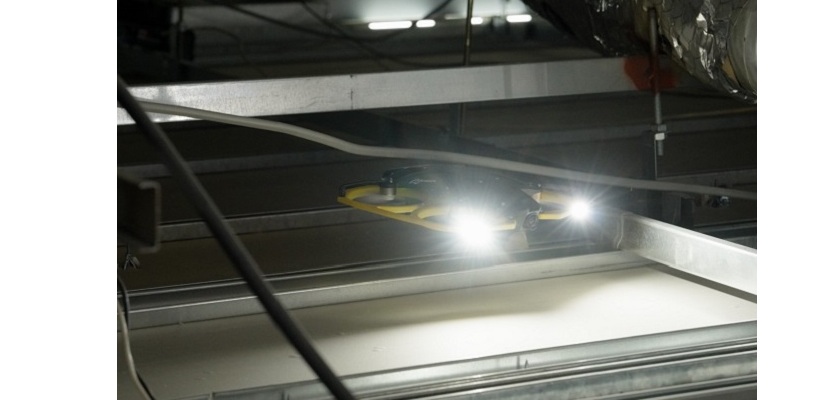
In this article, we introduce a case study of ceiling underside inspection for railway viaduct facilities in the Western Japan region.
●Background and History of Implementation
Previously, a different contractor filmed the same space using the "IBIS2" indoor drone. However, because this was in a different location and the footage did not include the specific areas we needed to check, a new inspection filming session became necessary.
This was an underside ceiling inspection of facilities located beneath railway viaducts. Conventional manual inspections typically require two to three workers and take two to three days.
When a construction company in charge of the work consulted an equipment company, their representative searched online and found us. Since there was a previous history of business transactions with us, we were awarded the contract.
The "IBIS2", selected this time, is a drone specialized for indoor and extremely narrow space inspections. It can fly accurately even in environments where GPS is unavailable, such as indoors or underground, and is capable of capturing high-quality images in tight or dark spaces. Since it is available for rent, no significant initial investment is required.
● Examining implementation results from three perspectives
1. Working Hours
The number of working days was reduced to one-third of the conventional process, resulting in a significant reduction in time.
・Traditional manual inspection: 2 to 3 days (2 to 3 workers)
・Inspection with IBIS2: Completed in 1 day
We frequently receive praise from the field for our speed.
2. Fees
We appreciate your candid feedback regarding the direct costs.
"It's expensive. It's cheaper if 3 to 4 workers do the work."
Admittedly, looking solely at labor costs, drone rentals can appear more expensive. However, safety measures and the risk of potential accidents are also important factors that must be taken into consideration.
3. Safety
Additionally, we received the following comment from the representative:
"Workers going up into the ceiling space carry a high risk of falling through. It's a relief to have been able to avoid that risk."
By introducing drones, workers were able to complete inspections without entering hazardous environments. This was recognized and praised for helping prevent occupational accidents.
Low barrier to entry because it's a rental
When purchasing a drone, it involves not only the equipment cost but also various expenses and time-consuming tasks such as maintenance, insurance, storage, and pilot training.
With rentals, you can use the latest equipment with zero initial investment, and borrow items only when needed and for as long as necessary.
In addition to drone-only rentals, for rentals with an operator, an experienced pilot will accompany you to the site, handling everything from preparation and flight to packing up. Because veteran pilots operate the drones, this also helps minimize the risk of accidents during flight.
As a first step toward adopting construction DX, please consider rental as an option in addition to purchasing.
Equipment used in this case study = Ultra-narrow space inspection drone "IBIS2"
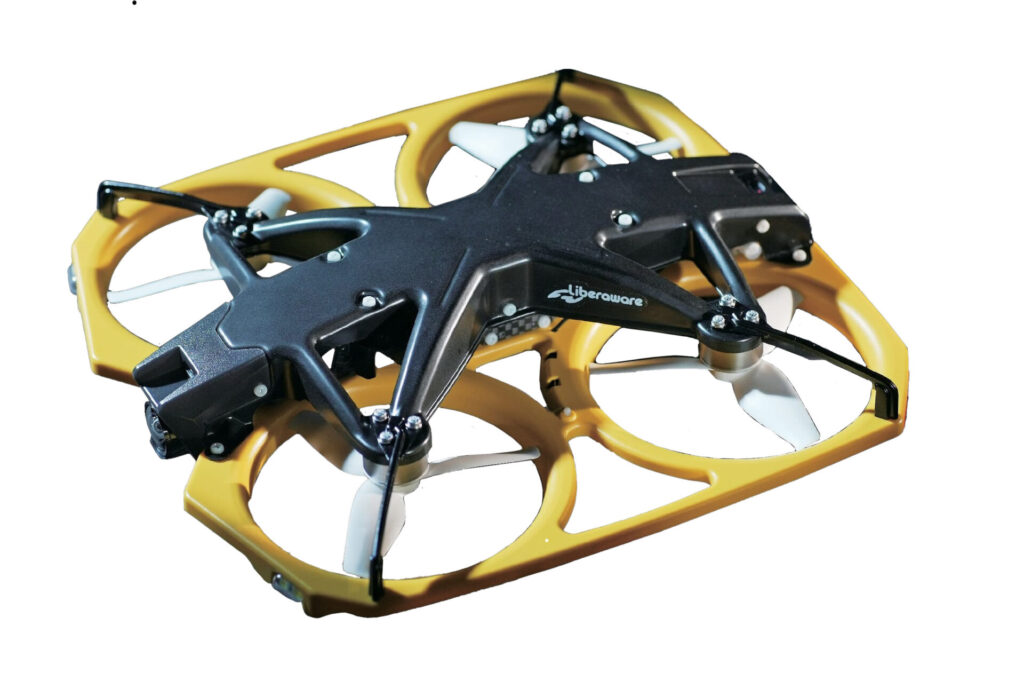
- Equipped with a proprietary dust-resistant mortar and IP51 compliance, enabling flight even in dusty and droplet environments.
- High-sensitivity image sensor and natural lighting for clear images
- Compact industry-minimum size allows access to confined spaces
- Maintaining a stable flight posture with a proprietary flight control system and round form
- Two plans are available: a rental plan for the equipment set only, and an inspection service plan that includes an operator.
Conclusion ― Balancing Safety and Efficiency
As a solution to the labor shortages, safety management challenges, and efficiency hurdles facing the construction industry, the use of drones is becoming increasingly widespread.
In the railway viaduct inspection case study introduced here, the working days were reduced to one-third, allowing inspections to be completed while ensuring worker safety. Drone rentals are a practical choice for achieving these kinds of results.
If you are struggling with hazardous or inaccessible tasks—such as ceiling inspections, high-altitude surveys, or checking confined spaces where people cannot enter—please consider our drone rental service as a solution.